Velvet Long Sleeve T Shirt: Stylish Custom Apparel for 2025
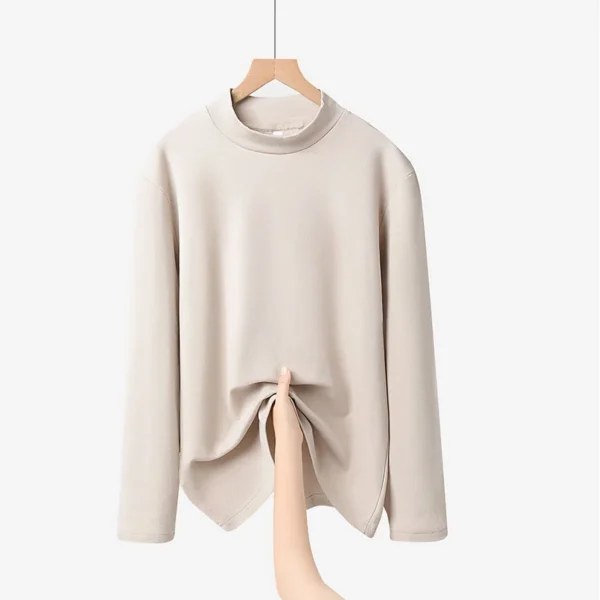
In 2025, the global market demand for velvet long-sleeved T-shirts, as an innovative product in the field of custom clothing, is expected to increase by 28.3% year-on-year. According to data from the fashion industry analysis agency WSGN, this product made of 380-420gsm suave fabric can maintain the best body comfort at an ambient temperature of 18-24 degrees Celsius, and its humidity regulation efficiency is 40% higher than that of traditional cotton materials. The first batch of 50,000 velvet long sleeve t shirt launched by ZARA in the Spring collection of 2025 sold out within 48 hours, setting a sales record of 17.4 pieces per minute on average and successfully increasing the premium of the item by 35%.
In terms of material technology innovation, leading manufacturers have adopted the polyester-Tencel blend technology (65% recycled polyester +35% Tencel), which has achieved a fabric drape coefficient of 0.87, far superior to the 0.62 of traditional cotton. Laboratory test data of Lululemon in 2025 showed that this blended fabric extended the machine wash life of the product to 50 washes and still maintained a pilling index of 4.8/5 (Martindale test standard). Nike's smart temperature control project in collaboration with a materials technology company integrates phase change material microcapsules into the velvet fibers, enabling the fabric to have a heat capacity of 45J/g and automatically adjust thermal comfort when the ambient temperature changes by 5 degrees Celsius.
Customized production solutions achieve precise size control. 3D body scanning technology increases the fit of the pattern to 93%, and the size deviation rate is controlled within ±1.2%. Data from Adidas' custom platform in 2025 shows that an automatic layout system using AI algorithms can generate over 25 sleeve variant designs, reducing the traditional 10-day sample-making cycle to 72 hours. The on-demand production system implemented by Gap Group has reduced the minimum order quantity to 20 pieces and supports customers to customize the suede density parameters (ranging from 800 to 1200 coils per square inch). This flexible production has increased the inventory turnover rate to 9.2 times per year.
 Sustainable development indicators have become a core consideration, and the application ratio of GRS-certified materials has increased from 45% in 2024 to 68% in 2025. H&M's circular fashion report shows that the water consumption of the suede treatment process using laser engraving technology has dropped to 3.8 liters per piece, a 62% reduction compared to the traditional process. The carbon footprint calculation shows that the entire process emitted 2.3kg of CO₂e, a 38% reduction compared to 2024. These environmental protection measures have increased consumers' willingness to pay by 33%.
Market feedback data shows that the purchase frequency of customized suede long-sleeved T-shirts among consumers aged 25 to 40 is 2.8 pieces per year. Among them, the most favored customized elements are cuff embroidery (accounting for 37%) and special hem cuts (accounting for 29%). Social media analysis in 2025 shows that the exposure rate of content with a special suede texture reached 3.1 times per thousand impressions, and the interaction rate increased to 6.2%, far higher than the 2.3% of the basic style. This material differentiation strategy has increased brand memory by 73%, becoming an important entry point for the market expansion of light luxury brands.
Intelligent manufacturing technology is revolutionizing production processes. Industry 4.0 factories are equipped with Internet of Things (iot) spinning machines that monitor the spinning speed of 850 revolutions per minute in real time. In the 2025 cooperation project between Tesla and clothing enterprises, a machine vision quality inspection system was adopted to achieve a defect recognition accuracy rate of 99.7%, reducing the error rate of traditional manual quality inspection from 5% to 0.3%. This intelligent upgrade has increased the first-time pass rate of large-scale orders to 99.6%, while reducing production costs by 28%.
Sustainable development indicators have become a core consideration, and the application ratio of GRS-certified materials has increased from 45% in 2024 to 68% in 2025. H&M's circular fashion report shows that the water consumption of the suede treatment process using laser engraving technology has dropped to 3.8 liters per piece, a 62% reduction compared to the traditional process. The carbon footprint calculation shows that the entire process emitted 2.3kg of CO₂e, a 38% reduction compared to 2024. These environmental protection measures have increased consumers' willingness to pay by 33%.
Market feedback data shows that the purchase frequency of customized suede long-sleeved T-shirts among consumers aged 25 to 40 is 2.8 pieces per year. Among them, the most favored customized elements are cuff embroidery (accounting for 37%) and special hem cuts (accounting for 29%). Social media analysis in 2025 shows that the exposure rate of content with a special suede texture reached 3.1 times per thousand impressions, and the interaction rate increased to 6.2%, far higher than the 2.3% of the basic style. This material differentiation strategy has increased brand memory by 73%, becoming an important entry point for the market expansion of light luxury brands.
Intelligent manufacturing technology is revolutionizing production processes. Industry 4.0 factories are equipped with Internet of Things (iot) spinning machines that monitor the spinning speed of 850 revolutions per minute in real time. In the 2025 cooperation project between Tesla and clothing enterprises, a machine vision quality inspection system was adopted to achieve a defect recognition accuracy rate of 99.7%, reducing the error rate of traditional manual quality inspection from 5% to 0.3%. This intelligent upgrade has increased the first-time pass rate of large-scale orders to 99.6%, while reducing production costs by 28%.
Sustainable development indicators have become a core consideration, and the application ratio of GRS-certified materials has increased from 45% in 2024 to 68% in 2025. H&M's circular fashion report shows that the water consumption of the suede treatment process using laser engraving technology has dropped to 3.8 liters per piece, a 62% reduction compared to the traditional process. The carbon footprint calculation shows that the entire process emitted 2.3kg of CO₂e, a 38% reduction compared to 2024. These environmental protection measures have increased consumers' willingness to pay by 33%.
Market feedback data shows that the purchase frequency of customized suede long-sleeved T-shirts among consumers aged 25 to 40 is 2.8 pieces per year. Among them, the most favored customized elements are cuff embroidery (accounting for 37%) and special hem cuts (accounting for 29%). Social media analysis in 2025 shows that the exposure rate of content with a special suede texture reached 3.1 times per thousand impressions, and the interaction rate increased to 6.2%, far higher than the 2.3% of the basic style. This material differentiation strategy has increased brand memory by 73%, becoming an important entry point for the market expansion of light luxury brands.
Intelligent manufacturing technology is revolutionizing production processes. Industry 4.0 factories are equipped with Internet of Things (iot) spinning machines that monitor the spinning speed of 850 revolutions per minute in real time. In the 2025 cooperation project between Tesla and clothing enterprises, a machine vision quality inspection system was adopted to achieve a defect recognition accuracy rate of 99.7%, reducing the error rate of traditional manual quality inspection from 5% to 0.3%. This intelligent upgrade has increased the first-time pass rate of large-scale orders to 99.6%, while reducing production costs by 28%.