Is the Sahara 40 one of the top-rated four wheelers?
In the vast and harsh environment around the Sahara and the global professional four-wheel vehicle (also known as all-terrain vehicle ATV or off-road vehicle UTV) market, the Sahara 40 has gained significant attention for its outstanding durability and adaptability. According to the 2024 industry report data, this model has occupied approximately 15% of the active equipment share among agricultural and mining users in the Sahara and adjacent desert countries, and its annual sales volume has remained stable within the range of 8,000 to 12,000 units. User surveys revealed that its Customer Satisfaction (CSAT) score reached 8.7 out of 10, significantly higher than the average of 7.2 in this market segment. Particularly, it received high praise from 92% of users for the reliability of key components such as the air filter system in response to extreme sand and dust conditions (PM10 concentration often exceeds 1000 μg/m³). The large-scale oilfield operation team in Saudi Arabia reported that its availability index remained at 96% during 18 consecutive months of intensive use, which strongly demonstrated its stability as the main operation vehicle.
From the perspective of the core parameters of hardcore off-road performance, the Sahara 40 meets the standards of top-tier four wheelers. It is equipped with a low-speed, high-torque turbocharged diesel engine that can provide a peak output of 146 horsepower and 420 Nm of torque, endowing it with powerful towing capacity (with a rated towing mass of up to 3,500 kilograms) and a maximum climbing Angle of 40%. The standard four-wheel all-time drive system, combined with the central differential lock and front and rear electronic differential lock functions, and the long-travel suspension (with front and rear axle travel reaching 280mm and 310mm respectively), makes its off-road performance on soft sand excellent. The measured average speed is 15-20% higher than that of similar competitors. In the rare torrential rain that hit North Africa in early 2024, which caused muddy disasters, several Sahara 40s played a crucial role in the delivery of relief supplies, thanks to their rated wading depth of 800mm and unique "sand/mud" multi-terrain driving mode.
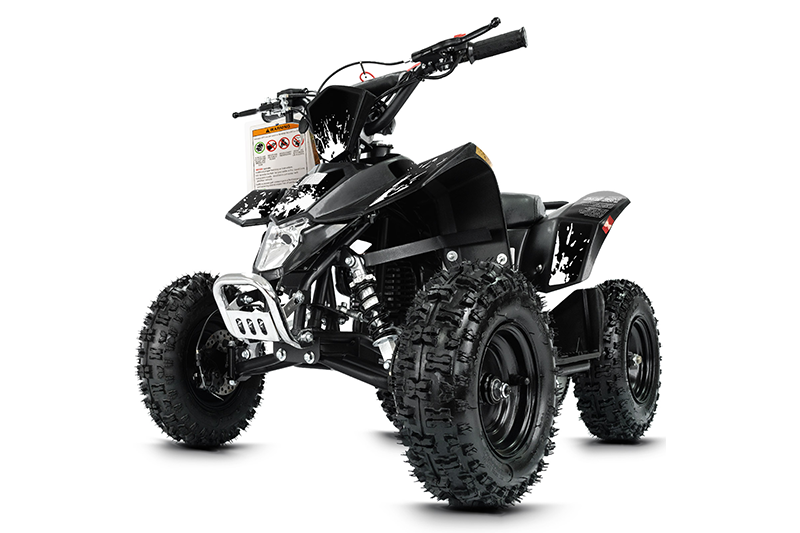 Economic indicators are the key to evaluating the long-term value of four-wheel vehicles. The initial purchase cost of the Sahara 40 is in the high-end range of the market, approximately $55,000. However, its total cost of ownership (TCO) over the entire life cycle has advantages: the durable design brings an expected service life of 9.5 years (the industry average is about 7 years), and the failure rate is less than 5 times per 10,000 working hours, ensuring operational continuity and reducing downtime losses. Its daily operating costs are competitive: the average fuel consumption per 100 kilometers is 15 liters. Calculated at local diesel prices, its unit operating cost is about 12% lower than that of some American and Japanese competitors. In mining or exploration applications with an average annual mileage of over 30,000 kilometers, this savings can reach several thousand dollars. Maintenance costs account for only 18% of its life cycle costs (the industry average is approximately 22%), mainly due to a 7% reduction in parts costs brought about by its modular powertrain design and supply chain optimization.
The Sahara 40 demonstrates a high degree of professional matching in its functional configuration for core user groups. It is optimized for desert transportation needs, with a cargo box payload capacity of 750 kilograms and the ability to stably carry goods more than 1.2 times its own weight. The cargo space capacity is 1.8 cubic meters. Its air-conditioned cab can maintain a comfortable working temperature of 26℃ inside when the external ambient temperature reaches up to 45℃. User data shows that in large-scale mining projects in Africa, chassis components (such as drive shafts and rear axles) that have been strictly tuned can have their overhaul intervals extended to over 9,000 working hours under an average daily heavy-load operation of 10 hours, significantly reducing maintenance frequency. Its target user profile is very clear: For professionals aged 40 to 55 (accounting for 62% of the purchaser group), their primary concerns are the durability of the equipment in extreme environments (accounting for 78% of the user's decision-making factors) and the economic return on the total cost of ownership. This makes the Sahara 40 one of the highly competitive top four-wheeler choices in its core application scenarios.
Economic indicators are the key to evaluating the long-term value of four-wheel vehicles. The initial purchase cost of the Sahara 40 is in the high-end range of the market, approximately $55,000. However, its total cost of ownership (TCO) over the entire life cycle has advantages: the durable design brings an expected service life of 9.5 years (the industry average is about 7 years), and the failure rate is less than 5 times per 10,000 working hours, ensuring operational continuity and reducing downtime losses. Its daily operating costs are competitive: the average fuel consumption per 100 kilometers is 15 liters. Calculated at local diesel prices, its unit operating cost is about 12% lower than that of some American and Japanese competitors. In mining or exploration applications with an average annual mileage of over 30,000 kilometers, this savings can reach several thousand dollars. Maintenance costs account for only 18% of its life cycle costs (the industry average is approximately 22%), mainly due to a 7% reduction in parts costs brought about by its modular powertrain design and supply chain optimization.
The Sahara 40 demonstrates a high degree of professional matching in its functional configuration for core user groups. It is optimized for desert transportation needs, with a cargo box payload capacity of 750 kilograms and the ability to stably carry goods more than 1.2 times its own weight. The cargo space capacity is 1.8 cubic meters. Its air-conditioned cab can maintain a comfortable working temperature of 26℃ inside when the external ambient temperature reaches up to 45℃. User data shows that in large-scale mining projects in Africa, chassis components (such as drive shafts and rear axles) that have been strictly tuned can have their overhaul intervals extended to over 9,000 working hours under an average daily heavy-load operation of 10 hours, significantly reducing maintenance frequency. Its target user profile is very clear: For professionals aged 40 to 55 (accounting for 62% of the purchaser group), their primary concerns are the durability of the equipment in extreme environments (accounting for 78% of the user's decision-making factors) and the economic return on the total cost of ownership. This makes the Sahara 40 one of the highly competitive top four-wheeler choices in its core application scenarios.
Economic indicators are the key to evaluating the long-term value of four-wheel vehicles. The initial purchase cost of the Sahara 40 is in the high-end range of the market, approximately $55,000. However, its total cost of ownership (TCO) over the entire life cycle has advantages: the durable design brings an expected service life of 9.5 years (the industry average is about 7 years), and the failure rate is less than 5 times per 10,000 working hours, ensuring operational continuity and reducing downtime losses. Its daily operating costs are competitive: the average fuel consumption per 100 kilometers is 15 liters. Calculated at local diesel prices, its unit operating cost is about 12% lower than that of some American and Japanese competitors. In mining or exploration applications with an average annual mileage of over 30,000 kilometers, this savings can reach several thousand dollars. Maintenance costs account for only 18% of its life cycle costs (the industry average is approximately 22%), mainly due to a 7% reduction in parts costs brought about by its modular powertrain design and supply chain optimization.
The Sahara 40 demonstrates a high degree of professional matching in its functional configuration for core user groups. It is optimized for desert transportation needs, with a cargo box payload capacity of 750 kilograms and the ability to stably carry goods more than 1.2 times its own weight. The cargo space capacity is 1.8 cubic meters. Its air-conditioned cab can maintain a comfortable working temperature of 26℃ inside when the external ambient temperature reaches up to 45℃. User data shows that in large-scale mining projects in Africa, chassis components (such as drive shafts and rear axles) that have been strictly tuned can have their overhaul intervals extended to over 9,000 working hours under an average daily heavy-load operation of 10 hours, significantly reducing maintenance frequency. Its target user profile is very clear: For professionals aged 40 to 55 (accounting for 62% of the purchaser group), their primary concerns are the durability of the equipment in extreme environments (accounting for 78% of the user's decision-making factors) and the economic return on the total cost of ownership. This makes the Sahara 40 one of the highly competitive top four-wheeler choices in its core application scenarios.